Before any excavation begins, one question needs a reliable answer: what is underneath the ground?
Sydney construction sites can contain a mix of electrical cables, gas lines, water pipes, telecommunications conduits, drainage infrastructure and other buried assets. Some may be shown on existing plans, while others may have been installed or altered years ago. Relying on assumptions can create unnecessary risks when excavation starts.
This is why service locating Sydney work is an important part of planning many civil, utility, infrastructure and construction projects. Locating underground services helps project teams understand what is below the surface before machinery or workers begin disturbing the ground.
The process can involve reviewing available service information, using locating equipment and physically verifying services through controlled excavation where required. The exact approach depends on the site, the type of asset and the work being planned.
What Is Service Locating?
Service locating is the process of identifying the position of underground infrastructure before excavation or other ground-disturbing work takes place.
Underground services can include:
- Electrical cables
- Gas pipes
- Water mains
- Telecommunications cables and conduits
- Sewer infrastructure
- Stormwater pipes
- Other buried utility assets
Finding these services is not simply about knowing that an asset exists somewhere on a property. Project teams may need to establish its approximate route, position and depth so excavation can be planned appropriately.
Why Existing Plans Are Not Always Enough
Underground service plans are an important starting point, but they should not automatically be treated as an exact representation of what is below the ground.
Older infrastructure may have been modified, relocated or affected by later construction. Surface levels can also change over time.
SafeWork NSW specifically warns that current underground essential services information should be obtained before excavation begins. Its guidance also recommends planning and potholing before proceeding where appropriate.
That is why professional service locating can provide an additional layer of confidence before excavation equipment enters the work area.
Why Service Locating Sydney Projects Need Careful Planning
Sydney has a dense network of established infrastructure, particularly around developed suburbs, roads and commercial areas. Construction work can therefore take place close to services that have been in the ground for decades.
A damaged underground service can create much more than a repair bill. Depending on the asset, contact could lead to electrical hazards, gas incidents, flooding, communication outages, project delays or disruption to surrounding properties.
SafeWork NSW’s current guidance states that contact with underground services can cause serious injury or death and can also result in explosions, flooding and major service outages.
For that reason, service locating should be treated as part of project preparation rather than something to consider only after excavation has started.
How Does Underground Service Locating Work?
There is no single technique that works for every site. A professional locating process may combine several methods to build a clearer picture of the underground environment.
Reviewing Available Service Information
The first step is generally to gather existing information about the site.
This can include utility plans, project drawings, previous construction records and information obtained through the relevant service enquiry process.
This information can indicate which services may be present and where they are expected to run.
Using Electronic Locating Equipment
Specialist locating equipment can be used to detect and trace certain underground services.
Depending on the service and site conditions, technicians may use electromagnetic locating techniques or other detection methods to identify the likely route of a buried asset.
The equipment and technique used will depend on what is being located and the information already available.
Physical Verification
Sometimes locating a service electronically is not enough. The actual position or depth may need to be confirmed physically.
This is where potholing or non-destructive digging can become useful. SafeWork NSW’s excavation guidance explains that available information may not always be accurate and that excavation methods can include exposing a short section of underground service using water pressure and a vacuum system.
This combination of locating and physical verification can provide a much clearer understanding of what is actually beneath the surface.
Service Locating and Non-Destructive Digging
Service locating and non-destructive digging often work together, but they are not exactly the same thing.
Service locating focuses on identifying the likely position and route of underground assets. Non-destructive digging is a method of carefully removing soil around those assets to physically expose and verify them.
For example, a locating technician may identify the likely path of a telecommunications conduit. A pothole can then be created at a selected point to confirm the actual position and depth.
This approach is particularly useful before larger excavation begins.
The current SafeWork NSW guidance recommends obtaining underground service information and using appropriate verification processes before excavation work proceeds.
Key Benefits of Professional Service Locating
The value of professional service locating Sydney work goes beyond simply finding cables and pipes.
Reduces the Risk of Service Damage
Knowing where underground infrastructure is located allows workers and machinery operators to plan excavation around it.
This does not eliminate every risk, but it provides important information for establishing appropriate controls.
Supports Safer Excavation
Excavation near live electrical services, gas mains or other essential infrastructure can present serious hazards.
SafeWork NSW identifies excavation near certain underground services as high-risk construction work and states that appropriate safety planning is required in relevant circumstances.
Helps Avoid Unplanned Delays
Discovering an unexpected pipe or cable halfway through excavation can bring work to a standstill.
Locating and verifying services beforehand gives project teams an opportunity to identify potential conflicts earlier.
Supports Better Project Planning
Accurate information about underground assets can influence excavation routes, trench locations, equipment selection and construction sequencing.
This can make planning more straightforward before work begins.
Protects Essential Infrastructure
Underground services are not always easy to repair or replace. Damage can affect not only the construction project but also neighbouring homes, businesses and public infrastructure.
Service Locating Methods at a Glance
The most appropriate method depends on the service, ground conditions, site access and level of certainty required.
| Method | Purpose | Typical Use | Key Consideration |
| Service plans and records | Identify known underground assets | Initial project planning | Records may not reflect every site change |
| Electromagnetic locating | Detect and trace conductive services | Cables and suitable metallic services | Results depend on service characteristics and site conditions |
| Ground investigation | Examine selected areas | Confirming underground conditions | Requires suitable planning and controls |
| Potholing | Physically expose a service | Confirming location and depth | Must be carried out using an appropriate safe method |
| Hydro excavation | Loosen and vacuum soil around an asset | Non-destructive service exposure | Equipment and technique must suit the site |
| Combined locating and verification | Build a more complete picture | Complex or congested sites | Requires coordination between locating and excavation activities |
No single method should automatically be considered sufficient for every project. A competent contractor can assess the available information and determine what additional verification may be appropriate.
When Should You Arrange Service Locating?
Ideally, underground service investigation should happen before excavation begins.
This applies to more than major road or infrastructure projects. Smaller construction activities can also encounter buried services.
You may want to consider service locating when planning:
Civil Construction
Roadworks, kerbing, drainage, footpaths and other civil works can involve excavation near existing infrastructure.
Utility Installation
Installing new pipes, cables or conduits can require excavation through areas where existing services are already present.
Commercial Development
Building projects often require foundations, drainage, electrical infrastructure and other underground works.
Telecommunications Projects
New telecommunications infrastructure can cross areas containing existing power, water and gas services.
Industrial Work
Industrial sites can have complex underground networks developed over many years, making accurate investigation particularly important.
Landscaping and Groundworks
Even smaller excavation activities can encounter buried cables, pipes or irrigation infrastructure.
The size of the job does not automatically determine the risk. What matters is what is beneath the work area and how the excavation will interact with it.
What Happens If an Underground Service Is Unexpectedly Found?
Stopping and reassessing the work is generally preferable to simply continuing.
An unexpected cable, pipe or conduit may not be shown exactly where expected on available plans. Workers should not assume that an unidentified service is abandoned or safe to disturb.
The appropriate response depends on the asset and site circumstances. The relevant service owner or authority may need to be contacted, and the work area may need additional investigation before excavation continues.
SafeWork NSW states that underground essential services information must be obtained before excavation and provided to people carrying out the work.
This is one reason locating and verification should happen before excavation rather than becoming an emergency response after something unexpected is discovered.
Service Locating Sydney and Hydro Excavation
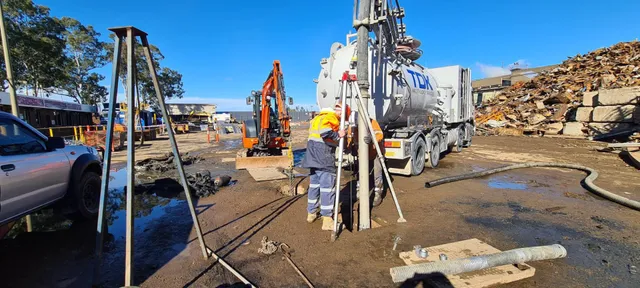
Hydro excavation can be especially useful when a project requires physical confirmation of underground assets.
High-pressure water breaks up the surrounding soil while a vacuum system removes the loosened material. This allows selected areas to be exposed without relying solely on mechanical excavation.
For example, if a project team needs to confirm the depth of an underground pipe before installing a new service nearby, a controlled pothole may provide the information required.
The process can also be useful when several underground assets are located close together.
The key advantage is control. Instead of opening a large area simply to discover where an asset sits, the excavation can be targeted around the location being investigated.
What Should You Ask a Service Locating Contractor?
Choosing a contractor should involve more than asking for a price.
Ask About the Services They Can Locate
Different locating equipment is suitable for different types of underground assets. Ask whether the contractor has experience with the specific services expected at your site.
Explain the Planned Excavation
The contractor needs to understand why the service is being located. Installing a new conduit may require different information from a project investigating an existing damaged pipe.
Discuss Verification Requirements
Ask whether the project needs electronic locating only or whether physical exposure through potholing or hydro excavation may also be appropriate.
Provide Existing Information
Give the contractor any available plans, service drawings and project details. The more useful information available at the start, the easier it may be to plan the investigation.
Consider Site Access
Large equipment needs suitable access and a safe location to operate. Restricted sites may require additional planning.
How to Prepare for Service Locating
A little preparation can make the process more efficient.
Before the contractor arrives, gather available underground service plans and project drawings. Mark the proposed excavation area and identify any known services.
Also consider access for locating equipment and, if required, a hydro excavation truck.
Most importantly, do not treat service locating as a replacement for broader excavation safety planning. It is one part of a properly managed process.
Safety and Government Requirements
Underground service locating is closely connected with excavation safety.
SafeWork NSW states that the person with management or control of a workplace must take reasonable steps to obtain current underground essential services information before allowing excavation work to commence. The information must also be provided to those carrying out the excavation.
This should be read alongside the specific requirements that apply to your project, site and type of excavation work.
Common Mistakes to Avoid
Some excavation problems occur because underground services are treated as an afterthought.
Avoid assuming that old plans are completely accurate. Do not rely on surface indicators alone, and never assume that an unidentified cable or pipe is no longer in use.
It is also important not to start excavation simply because a service plan has been obtained. Plans provide useful information, but physical verification may still be required depending on the work.
Another common mistake is failing to communicate the information to everyone involved. Service locations should be understood by the people who will actually operate machinery or carry out excavation.
Conclusion
Knowing what is below the surface is an important part of responsible excavation planning. Service locating Sydney projects can help identify underground assets before workers and machinery begin disturbing the ground, giving project teams better information for planning the work.
For sites where electronic locating needs to be supported by physical verification, hydro excavation and non-destructive digging can provide another practical way to expose selected sections of underground infrastructure.
For professional service locating, hydro excavation and non-destructive digging support across Sydney and NSW, TDK Industrial Services can discuss your project requirements and help determine a suitable approach. Explore hydro excavation services or contact the team to discuss your upcoming project.
Frequently Asked Questions
1. What is service locating?
Service locating is the process of identifying underground pipes, cables, conduits and other buried infrastructure before excavation or ground-disturbing work begins.
2. Why is service locating important before excavation?
It helps project teams understand what may be underground so excavation can be planned around existing assets. This can reduce the risk of accidental damage, injuries, service outages and project delays.
3. Can service locating find underground electrical cables?
Specialist locating equipment can detect and trace suitable underground electrical services. The exact technique depends on the cable, site conditions and information available.
4. Is potholing the same as service locating?
No. Service locating generally identifies the likely position of an underground asset, while potholing physically exposes a selected section to verify its location and depth. The two methods can be used together.
5. Is hydro excavation useful for service locating?
Hydro excavation can be used for physical verification and non-destructive exposure of underground services. It uses water and vacuum equipment to remove soil around selected areas, subject to appropriate site planning and safety controls.