Industrial sites deal with a surprising amount of material that can settle in places people rarely think about. Pits, drains, stormwater areas and collection points can gradually collect sediment, sludge, slurry, wastewater, debris and other site waste. At first, the build-up may not appear to cause a problem. Over time, though, it can reduce capacity, restrict drainage and make routine site operations harder.
Regular pit cleaning helps industrial, commercial, civil and infrastructure sites keep these areas functional. It is not simply about making a worksite look cleaner. Proper cleaning can remove accumulated material before it interferes with drainage, access, maintenance or normal site operations.
For larger sites, this work often requires specialist vacuum equipment rather than conventional cleaning methods. Industrial vacuum trucks can remove wet and dry material from pits and other difficult-access areas while allowing site teams to focus on their primary operations.
What Is Pit Cleaning?
Pit cleaning involves removing accumulated material from industrial pits, drainage areas, collection points and related site infrastructure. Depending on the location, the material may include sediment, sludge, stormwater, wastewater, slurry, wash-down waste, mud and general debris.
Unlike residential drain cleaning, industrial work can involve much larger volumes and more challenging access conditions. Some pits may be located beneath equipment, inside active facilities or within areas where manual removal would be slow and impractical.
Industrial vacuum cleaning provides a practical option for these environments. Vacuum equipment can extract liquids and accumulated material from areas that are difficult to reach with ordinary cleaning equipment.
The exact cleaning method depends on the type of pit, the material inside it, site access, the volume involved and the requirements of the project.
Why Regular Pit Cleaning Matters
A neglected industrial pit can become difficult to manage once material continues to accumulate. Sediment can reduce available capacity, while sludge and debris may interfere with the movement of water through drainage infrastructure.
In areas exposed to heavy rainfall, blocked or heavily built-up drainage infrastructure can become an even greater concern. Industrial sites may also have wash-down areas where liquids and solids regularly enter collection systems.
Scheduled cleaning gives site managers an opportunity to deal with accumulated material before it becomes a larger maintenance issue.
There are several practical reasons to include pit maintenance in a broader site management plan:
- Helps maintain drainage capacity
- Removes accumulated sludge and sediment
- Supports cleaner and safer work areas
- Reduces excessive material build-up
- Makes routine maintenance easier
- Helps manage stormwater and wastewater
- Supports preventive maintenance programs
- Provides a practical solution for hard-to-access areas
Common Materials Found in Industrial Pits
The contents of an industrial pit can vary significantly from one site to another. A manufacturing facility may have different waste streams from a concrete plant, transport yard or civil construction site.
Sediment is common in areas exposed to soil, dust and surface water. Sludge can develop where liquids and fine materials settle over time. Industrial sites may also have slurry, wash water, wastewater, product residue or other materials that need to be removed.
Before work begins, the material should be considered as part of the planning process. Knowing what is inside the pit helps determine the appropriate equipment, handling method and safety requirements.
Typical Materials May Include
| Material or Site Condition | Common Source | Cleaning Requirement |
|---|---|---|
| Sediment | Stormwater and surface runoff | Vacuum removal and disposal |
| Sludge | Industrial processes and collection areas | Industrial vacuum loading |
| Slurry | Concrete and construction activities | Vacuum extraction |
| Wastewater | Wash-down and industrial operations | Liquid waste removal |
| Stormwater | Heavy rainfall and drainage systems | Vacuum pumping |
| Debris | General site activity | Vacuum or manual removal |
| Mud | Construction and vehicle areas | Wet material removal |
| Product residue | Manufacturing and processing | Specialist material removal |
The table is a general guide. Actual site requirements depend on the material, volume, location and operating environment.
Industrial Pit Cleaning vs Residential Drain Cleaning
It is important to understand that industrial pit cleaning is different from ordinary household drain services. Industrial sites can contain large pits, collection systems, stormwater infrastructure and waste areas that require significantly different equipment and planning.
The work may involve vacuum trucks capable of handling substantial quantities of wet or dry material. Access can also be challenging, particularly where pits are located below conveyors, machinery, hardstand areas or other industrial structures.
For this reason, industrial cleaning should be approached as part of the site’s wider maintenance requirements rather than treated as a standard blocked-drain job.
When Should an Industrial Pit Be Cleaned?
There is no single cleaning schedule that suits every industrial site. The frequency depends on how quickly material accumulates, the type of operation, weather conditions, site layout and the amount of water or waste entering the pit.
Some facilities may benefit from scheduled preventive maintenance, while others may require cleaning after specific operational activities or weather events.
Visible build-up is one obvious sign that cleaning may be necessary. Slow drainage, reduced capacity, unpleasant site conditions or repeated overflow problems can also indicate that an inspection is worthwhile.
Waiting until a pit becomes completely full can make the work more difficult. Planned maintenance allows site managers to address accumulation at a more manageable stage.
Stormwater Pit and Drainage Cleaning
Stormwater infrastructure plays an important role in managing water around industrial and commercial properties. During heavy rain, pits and drainage areas may receive water carrying sediment, mud and debris from surrounding surfaces.
If this material settles in the system, available capacity can gradually decrease. Regular stormwater pit cleaning helps remove accumulated material and supports the ongoing function of the drainage infrastructure.
Industrial sites with large hardstand areas, loading zones, construction activity or exposed surfaces may need particular attention because these areas can contribute significant sediment and debris during rainfall.
Cleaning should be considered alongside broader stormwater maintenance rather than as an isolated task.
Vacuum Truck Support for Pit Cleaning
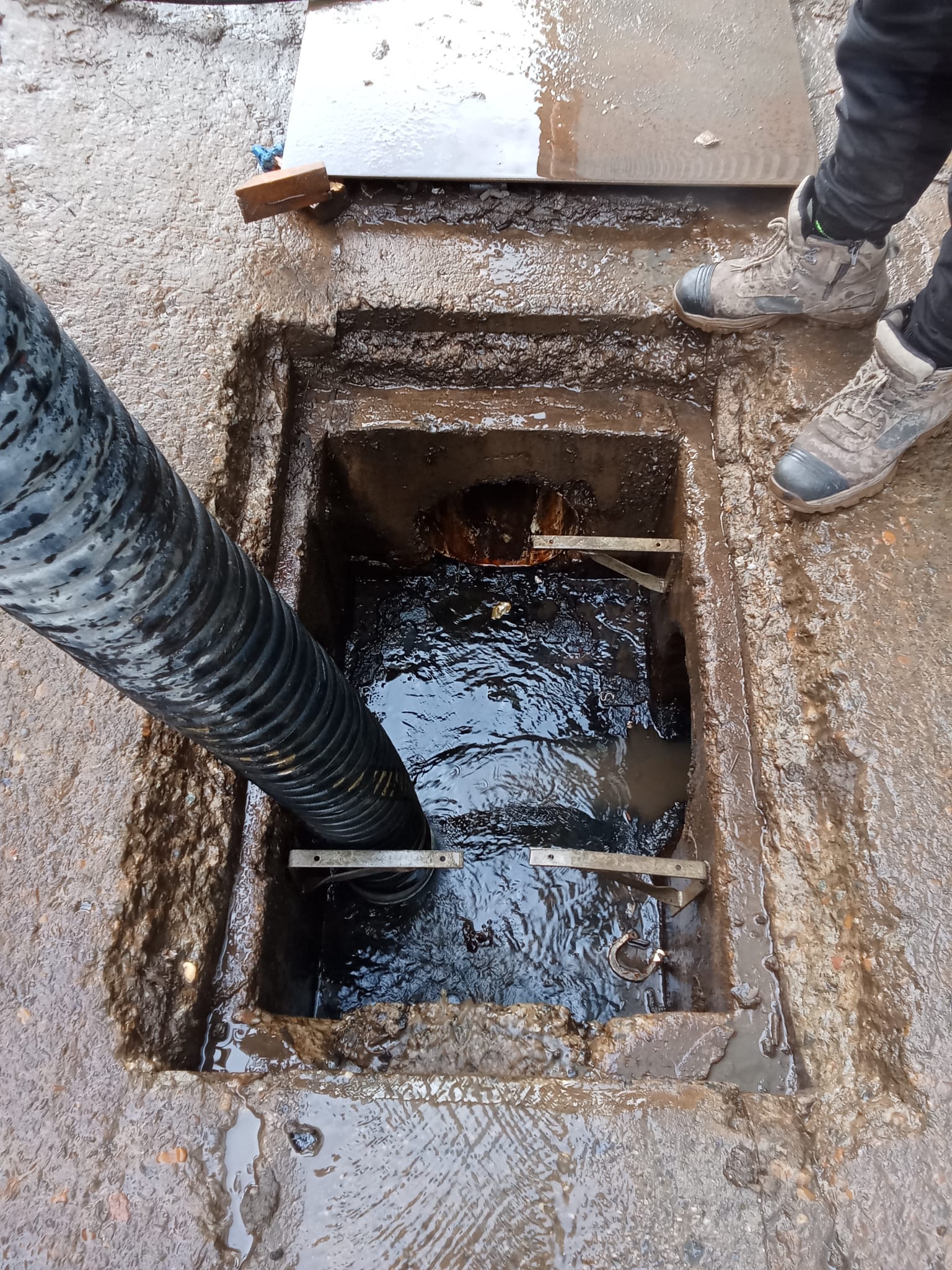
Industrial vacuum trucks are particularly useful when a pit contains large quantities of liquid, sludge or sediment. Instead of relying entirely on manual removal, vacuum equipment can extract material directly from the affected area.
This approach is useful where the pit is deep, access is restricted or the material cannot be easily removed using ordinary equipment.
Vacuum loading can also support work in areas where keeping the surrounding site clean and accessible is important. Depending on the project, the same equipment may be used for other industrial material-removal tasks, including tanks, sumps, under-conveyor areas and collection points.
Sludge and Sediment Removal
Sludge and sediment can settle at the bottom of pits and drainage structures. As accumulation increases, the usable volume of the pit may decrease.
Removing this material can restore available space and make the infrastructure easier to inspect and maintain. Industrial vacuum equipment is well suited to removing wet material from difficult-access locations.
The disposal and handling requirements will depend on the nature of the material and the applicable site procedures. Proper planning is therefore important before the work begins.
Pit Cleaning During Maintenance and Shutdowns
Planned shutdowns can provide a useful opportunity to carry out cleaning that may be difficult during normal operations. When equipment is temporarily offline, contractors may have improved access to pits, tanks, conveyors and other areas.
Combining pit cleaning with scheduled maintenance can make better use of the shutdown period. Other tasks, such as liquid waste removal, high-pressure water jetting, tank cleaning and industrial vacuum loading, may also be coordinated when appropriate.
The advantage of planning this work in advance is that site access, equipment requirements and safety controls can be considered before the shutdown begins.
Safety Considerations for Industrial Pit Work
Industrial pits should not be treated as ordinary cleaning areas. Depending on their location and contents, they may involve restricted access, moving equipment, contaminated material, liquid waste or confined-space considerations.
The work area should be assessed before cleaning begins. Site-specific procedures, access arrangements and appropriate safety controls should be established according to the conditions of the job.
Where a pit forms part of a confined or restricted-access environment, additional planning may be required. Industrial cleaning teams need to understand the conditions they are entering and the equipment being used.
A careful approach helps reduce unnecessary disruption while keeping the focus on safe and controlled work.
Other Industrial Services That Support Pit Maintenance
Pit maintenance is often connected with other industrial cleaning and site-support requirements. A facility may need several services during the same maintenance period, particularly when accumulated material is affecting multiple areas.
Industrial vacuum services can support wet and dry material removal from pits, tanks, vessels, silos, production areas, conveyors and weighbridges. High-pressure water jetting can also be used for suitable industrial cleaning and surface-preparation applications.
Other related services include:
- Wet and dry material removal
- Industrial vacuum loading
- Silo, tank and vessel cleaning
- Conveyor and weighbridge cleaning
- High-pressure water jetting
- Liquid waste removal
- Hydro excavation
- Non-destructive digging
- Confined-space support
- Working-at-height and EWP support
- Preventive maintenance
- Shutdown support
- Emergency spill response
These services allow industrial sites to address several maintenance requirements through a coordinated approach.
Choosing an Industrial Cleaning Provider
When arranging industrial cleaning, it is useful to choose a provider with equipment suited to the scale and conditions of the work. The provider should also understand the challenges associated with active industrial and civil sites.
Before booking a project, discuss the size and location of the pit, the type of material inside it, access limitations, expected volume and any relevant site restrictions.
It is also worth explaining whether the work is part of scheduled maintenance, a shutdown or an urgent response. These details can affect planning and equipment requirements.
A clear scope from the beginning can help avoid delays once the crew arrives on site.
Pit Cleaning for Different Industries
Different industries create different maintenance requirements. Manufacturing facilities may deal with process residue and wastewater, while concrete operations can generate slurry and sediment. Construction sites may have mud, soil and stormwater entering collection areas.
Transport and logistics sites can also experience material accumulation around hardstand areas and drainage infrastructure. Government, infrastructure, mining and heavy-industry projects may require larger-scale industrial support.
This is why cleaning methods should be selected according to the actual site rather than applying the same approach to every job.
Preventive Maintenance Can Reduce Unexpected Problems
Preventive maintenance is about dealing with predictable site issues before they become urgent. For industrial drainage infrastructure, that can mean inspecting pits regularly and arranging cleaning when accumulation reaches a manageable level.
A planned maintenance program can also help site managers keep track of cleaning requirements. Instead of responding only after an overflow or drainage issue, teams can schedule work around production cycles, shutdowns and other site activities.
The right schedule will depend on the individual property. Sites with heavy material movement or frequent wash-down activity may require more frequent attention than facilities with lower levels of accumulation.
Professional Pit Cleaning for Industrial Sites
Keeping industrial drainage and collection infrastructure in usable condition requires more than occasional surface cleaning. Sediment, sludge, stormwater, slurry and other materials can accumulate gradually and reduce the effectiveness of pits and drainage areas.
Professional pit cleaning provides a practical way to remove this build-up using equipment designed for demanding industrial environments. With suitable planning, the work can form part of scheduled maintenance, shutdown programs or emergency response.
For industrial, commercial, civil and infrastructure sites across Sydney and wider NSW, TDK Industrial Services provides specialist support for industrial pit and site drainage cleaning, vacuum loading, wet and dry material removal, liquid waste management and related industrial services. The team can discuss the site conditions and project requirements before work begins.
Conclusion: Keep Industrial Drainage Areas Ready for Use
Pits and drainage areas are easy to overlook until accumulated material starts affecting how a site operates. Regular cleaning can help manage sediment, sludge, stormwater, slurry and other waste before the build-up becomes a larger maintenance concern.
A sensible maintenance plan should consider the type of material entering the pit, how quickly it accumulates, site access, weather conditions and the operational demands of the facility. For many industrial environments, vacuum truck support provides an efficient way to remove wet and dry material from difficult-access locations.
If your site requires industrial pit cleaning, drainage maintenance, sludge removal or vacuum truck support, TDK Industrial Services can be contacted to discuss the project requirements and arrange suitable assistance across Sydney and wider New South Wales.
FAQs
1. What is included in industrial pit cleaning?
Industrial pit cleaning can include the removal of sediment, sludge, slurry, stormwater, wastewater, wash-down waste and debris from industrial pits, site drains and collection areas. The exact work depends on the condition and contents of the pit.
2. How often should industrial pits be cleaned?
There is no universal schedule. Cleaning frequency depends on the amount of material entering the pit, the type of industrial activity, weather conditions and the site’s drainage requirements. Regular inspections can help determine when cleaning is needed.
3. Can vacuum trucks remove sludge from industrial pits?
Yes. Industrial vacuum trucks are designed to remove wet materials such as sludge, slurry, sediment, wastewater and other suitable liquids or semi-liquid materials from difficult-access areas.
4. Is industrial pit cleaning the same as residential drain cleaning?
No. Industrial pit cleaning is designed for commercial, industrial, civil and infrastructure environments. These sites can involve larger volumes, specialist equipment, restricted access and different material-handling requirements.
5. Can pit cleaning be included in a shutdown maintenance program?
Yes. Cleaning can be scheduled alongside other maintenance activities during planned shutdowns. Depending on the site, related services may include tank cleaning, vacuum loading, liquid waste removal, conveyor cleaning and high-pressure water jetting.