
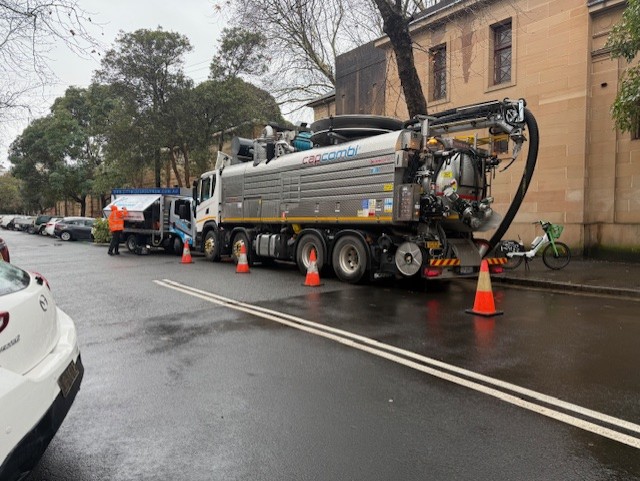
Excavation work becomes much more complicated when underground services are involved. Electricity cables, gas lines, water pipes, telecommunications infrastructure and other buried assets can sit close together, often with limited or outdated location information. A small mistake can cause significant damage, project delays and serious safety risks.
This is where vacuum excavation can provide a more controlled approach. Instead of relying entirely on mechanical digging equipment, the method uses water or air to loosen soil while a powerful vacuum system removes the material from the excavation area.
For contractors working on civil, infrastructure, industrial and utility projects, this approach can make it easier to expose buried services accurately while keeping unnecessary ground disturbance to a minimum.
Safe Work Australia also recommends using water pressure and a vacuum system when carefully exposing underground services, commonly referred to as potholing.
What Is Vacuum Excavation?
Vacuum excavation is a non-destructive digging technique designed to remove soil and other material from the ground using suction rather than relying solely on conventional mechanical excavation.
A typical system combines a vacuum unit with either pressurized water or air. The material surrounding a buried service is loosened, and the vacuum then transfers the spoil into a collection tank.
The result is a controlled excavation that can expose a specific section of ground without unnecessarily disturbing the surrounding area.
This is particularly useful where underground infrastructure is already present or where the precise position of a buried asset needs to be confirmed before larger excavation work begins.
Unlike conventional excavation with an excavator bucket, the process allows operators to work carefully around sensitive infrastructure. It can therefore be a valuable option for utility exposure, potholing, service investigations and other specialized excavation activities.
How Does Vacuum Excavation Work?
The process may appear straightforward, but successful excavation depends on proper planning, suitable equipment and experienced operators.
First, the work area is assessed and available information about underground services is reviewed. This is an important step because service plans and records may not always provide exact locations.
The excavation area is then carefully established. Depending on the site requirements, water or air is used to break up the soil around the target area. The vacuum system removes the loosened material and stores it in a dedicated tank.
As the excavation progresses, operators can carefully expose the buried service. Once the required information has been obtained, the excavation can be completed or prepared for the next stage of the project.
This controlled process is one reason vacuum excavation is frequently considered for projects where precision matters more than simply removing large quantities of soil as quickly as possible.
Why Is Vacuum Excavation Useful Around Underground Services?
Underground infrastructure can create a major challenge for construction teams. Even when service drawings are available, actual conditions below ground can differ from historical records.
Safe Work Australia notes that information about existing underground essential services may not always be accurate. Its excavation guidance recommends an initial examination of the area, including exposing sections of services using water pressure and a vacuum system where appropriate.
Vacuum excavation supports this approach by allowing workers to expose specific sections of ground without using a large mechanical bucket directly against the suspected service.
This can be particularly valuable when working around:
- Underground electrical cables
- Gas infrastructure
- Water mains
- Sewer infrastructure
- Telecommunications services
- Fiber-optic cables
- Other buried utilities
The goal is not to eliminate every excavation risk. Instead, the method provides a more controlled way to investigate and expose the ground where underground assets are known or suspected to exist.
Key Benefits of Vacuum Excavation
The biggest advantage of vacuum excavation is control. Rather than removing large amounts of surrounding soil with conventional equipment, operators can focus excavation around a particular location.
Improved Utility Exposure
One of the most common applications is exposing buried services. Contractors may need to confirm the location, depth or condition of a utility before proceeding with construction.
Controlled excavation can make this investigation more practical and reduce unnecessary disturbance around the asset.
Reduced Ground Disturbance
Traditional excavation can disturb a relatively large area around the digging point. Vacuum-based methods can provide a more targeted approach, which may be useful on congested construction sites or around established infrastructure.
Better Support for Potholing
Potholing involves creating a small excavation to physically confirm the location of an underground service. Vacuum excavation can be used as part of this process, helping contractors establish where a service is before larger excavation activities begin.
Useful in Congested Areas
Urban and industrial sites often contain multiple underground assets within a relatively small area. Working carefully around these services can be difficult with conventional excavation equipment.
A vacuum system can offer greater control when the available working space is limited or several services are close together.
Potentially Less Damage to Surrounding Infrastructure
Because the process is designed to remove loosened material rather than directly digging into the ground with a bucket, it can be suitable for situations where surrounding infrastructure needs careful consideration.
However, the correct method still depends on the site conditions, service information, equipment and risk assessment.
Vacuum Excavation vs Conventional Excavation
The right excavation method depends on what the project needs to achieve. Conventional excavation remains highly effective for bulk earthmoving, trenching and large-scale material removal. Vacuum excavation, on the other hand, is particularly useful when precision and controlled material removal are important.
| Project consideration | Vacuum excavation | Conventional mechanical excavation |
|---|---|---|
| Utility exposure | Highly suited to controlled exposure | Can require greater care around services |
| Potholing | Well suited | Possible, but less targeted |
| Bulk soil removal | Generally less suited | Highly suited |
| Congested underground services | Useful for precision work | Requires careful operation |
| Ground disturbance | More targeted | Usually involves a larger excavation area |
| Service investigation | Suitable | May be excessive for small investigation points |
| Material handling | Spoil collected by vacuum unit | Spoil usually handled separately |
| Project role | Utility exposure, service investigation and specialized digging | Bulk excavation, trenching and earthworks |
The comparison does not mean one method should replace the other. In many projects, the two approaches can work together. For example, a contractor may use vacuum excavation to safely expose and confirm an underground service before conventional equipment is used for the wider excavation.
When Should You Consider Vacuum Excavation?
There is no single excavation method that suits every project. However, vacuum excavation can be worth considering when underground infrastructure is a major concern.
It can be particularly useful during:
- Utility location and exposure
- Potholing and service verification
- Civil construction projects
- Infrastructure upgrades
- Road and rail works
- Industrial construction
- Maintenance around existing services
- Work in congested underground environments
- Investigations before larger excavation activities
The method may also be considered where the project team needs to minimize unnecessary disturbance to the surrounding ground.
The important point is to select the excavation technique based on the actual site conditions rather than simply choosing the quickest-looking option.
Planning Vacuum Excavation Safely
Using specialized equipment does not remove the need for proper excavation planning. Before work begins, contractors should identify known hazards, obtain available underground service information and assess the conditions at the worksite.
Safe Work Australia states that PCBUs have duties to manage excavation risks and specifically identifies checking underground electrical cables and other assets through Before You Dig Australia as part of excavation planning.
The information obtained should be available to the relevant workers and contractors involved in the excavation.
It is also important to remember that service drawings are not necessarily a perfect representation of what is actually underground. This is why physical verification can be an important part of planning where services are involved.
The equipment, excavation method and controls should be selected according to the site conditions, project requirements and applicable WHS obligations.
Why Experienced Operators Matter
Equipment is only one part of a successful excavation project. The operator needs to understand the machinery, ground conditions, underground service risks and the limitations of the equipment being used.
Experienced operators can work according to the project plan, monitor excavation conditions and coordinate with other site personnel.
This is particularly important when multiple contractors are working around the same area. Clear communication helps ensure that everyone understands where underground services are located and what excavation activities are taking place.
For industrial and civil projects, professional excavation support can also make coordination easier when the work forms part of a larger construction, maintenance or infrastructure program.
What Happens After the Service Is Exposed?
Once a buried asset has been exposed, the project team can use the information to determine the next step.
Depending on the project, this could involve confirming the service location, recording its depth, carrying out maintenance, completing a connection or repair, or continuing with planned construction work.
The excavation may then be backfilled or managed according to the project requirements.
The key advantage is that the contractor has gained more reliable information about the actual underground conditions before progressing with work that could otherwise disturb the service.
The Role of Vacuum Excavation in Modern Construction
Modern construction sites are becoming increasingly complex. New infrastructure is frequently installed alongside existing services, particularly in established urban and industrial areas.
That means excavation teams cannot always treat an area as empty ground. They need to understand what may already be beneath the surface.
Vacuum excavation provides a practical method for investigating these areas while supporting more controlled excavation practices.
It is especially relevant to projects where underground service exposure, precision and reduced disturbance are priorities. Rather than viewing it as a replacement for every form of excavation, it is better understood as a specialized technique that can complement conventional excavation equipment.
Choose the Excavation Method Around the Project
Every excavation project has different requirements. Ground conditions, service congestion, access, excavation depth, material type, project deadlines and safety considerations can all influence the most appropriate method.
For sites where underground services are present, vacuum excavation can provide a controlled option for exposing and investigating those services before more extensive work takes place.
TDK Industrial Services provides specialized industrial and civil support services, including hydro excavation, non-destructive digging and utility exposure. These capabilities can be relevant to projects where careful excavation around existing infrastructure is required.
The right approach starts with understanding the site and planning the work properly. When underground services matter, precision should be treated as part of the project not as an afterthought.
Final Thoughts
Underground excavation requires more than removing soil. It requires an understanding of what may be beneath the surface and how the work can be completed without unnecessarily disturbing existing infrastructure.
Vacuum excavation offers a controlled technique for exposing buried services, carrying out potholing and investigating underground conditions. When combined with proper planning, current service information and competent operators, it can become a valuable part of civil, industrial and infrastructure projects.
For projects involving existing underground assets, choosing the appropriate excavation method early can help the wider team work with greater confidence and avoid preventable complications later in the project.
For specialized excavation, utility exposure and non-destructive digging requirements, TDK Industrial Services can provide project-specific support based on the conditions and scope of work.
Frequently Asked Questions
1. What is vacuum excavation used for?
Vacuum excavation is commonly used for controlled soil removal, underground utility exposure, potholing, service investigation and non-destructive digging around existing infrastructure.
2. Is vacuum excavation safer than conventional digging?
It can provide a more controlled approach around underground services because material is removed using suction rather than relying solely on a mechanical bucket. However, safety depends on proper planning, equipment, trained operators and appropriate risk controls.
3. Can vacuum excavation locate underground services?
It can help physically expose and verify the location of underground services. It should be used alongside appropriate service information and site planning rather than treated as a substitute for identifying underground assets before excavation.
4. What is the difference between vacuum excavation and hydro excavation?
Hydro excavation generally uses pressurized water to loosen soil before a vacuum system removes the resulting slurry. Vacuum excavation is a broader term describing excavation that uses vacuum suction to remove loosened material and can involve different techniques depending on the equipment and application.
5. Is vacuum excavation suitable for large construction projects?
Yes. Vacuum excavation can support civil, infrastructure, industrial and construction projects, particularly where utility exposure or non-destructive digging is required. It is often used alongside conventional excavation rather than replacing bulk earthmoving equipment.